Mersobahis and Digital Entertainment While Traveling: What Modern Users Should Consider
Article Intro
Travel has always contained stretches of waiting—quiet hours after a museum closes, slow evenings in an airport hotel, long rail journeys, and the pause between clearing security and seeing a gate number appear. What has changed is the object travelers reach for in those intervals. A smartphone now holds books, films, live scores, games, podcasts, and countless other diversions that once demanded separate devices or advance planning. Digital entertainment has become part of the modern travel kit, as ordinary as headphones and a charging cable.That convenience can make services feel borderless, although travel itself proves that they are not. A platform that opens at home may work differently, offer different features, or be unavailable after a border crossing. Payment systems can react to a foreign connection. Hotel and airport networks introduce security questions. Local law may also place firm limits on particular categories of entertainment. For travelers who choose to visit online gaming or betting services, Mersobahis is one example that belongs within this wider set of practical considerations. The relevant question is not simply whether a page loads; it is whether access is secure, lawful in the traveler's current location, age-appropriate, and compatible with a sensible travel budget.Hotels and airports are natural places to use digital services because they combine spare time, seating, power outlets, and Wi-Fi. They are also places where a traveler has little control over the network. A genuine hotel connection may be shared by hundreds of guests, while a network name that resembles the airport's official Wi-Fi can be created by somebody nearby. For low-risk activities such as reading public news, shared Wi-Fi may be adequate. Signing in to an account, changing a password, or entering payment information deserves more caution. When possible, use trusted mobile data or a verified private network, keep the operating system and browser updated, disable automatic Wi-Fi joining, and log out when a session is finished.Online availability changes at borders. Streaming libraries, games, payment tools, social platforms, and betting services can all change when a traveler crosses a border. Laws differ significantly among countries and sometimes among states, provinces, or territories within the same country. A traveler should check the regulator or government source for the place where they are currently located, rather than assuming that an account lawfully opened at home may be used everywhere. Access alone is never proof of permission.
By Tripcook
Updated: September 10, 2026
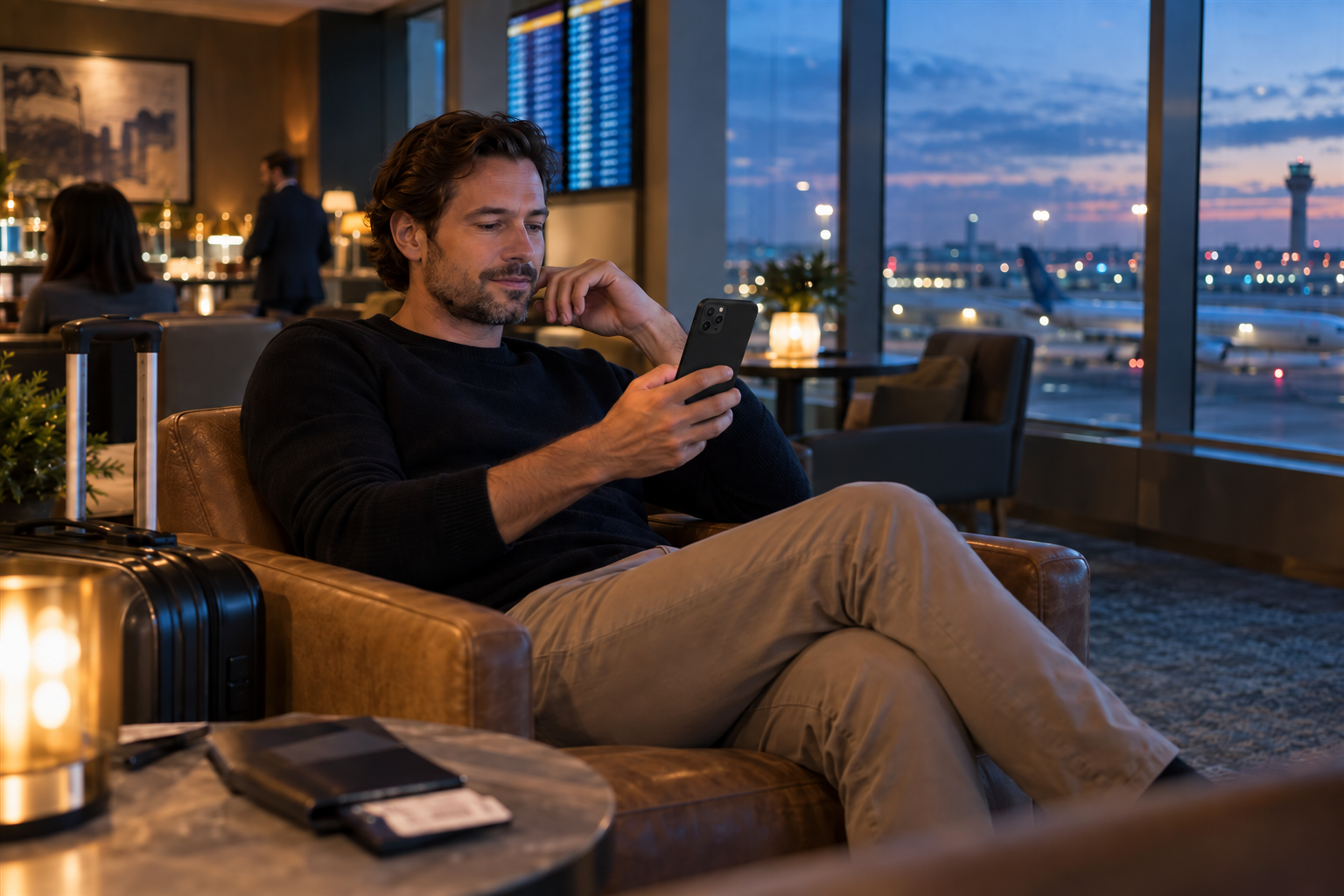
Travel has always contained stretches of waiting. There are quiet hours after a museum closes, slow evenings in an airport hotel, long rail journeys, and the familiar pause between clearing security and seeing a gate number appear. What has changed is the object travelers reach for in those intervals. A smartphone now holds books, films, live scores, games, podcasts, social conversations, and countless other diversions that once demanded separate devices or advance planning. Digital entertainment has become part of the modern travel kit, as ordinary as headphones and a charging cable.
That convenience can make services feel borderless, although travel itself proves that they are not. A platform that opens at home may work differently, offer different features, or be unavailable after a border crossing. Payment systems can react to a foreign connection. Hotel and airport networks introduce security questions. Local law may also place firm limits on particular categories of entertainment. For travelers who choose to visit online gaming or betting services, Mersobahis is one example that belongs within this wider set of practical considerations. The relevant question is not simply whether a page loads; it is whether access is secure, lawful in the traveler's current location, age-appropriate, and compatible with a sensible travel budget.
A smartphone can fill the quiet spaces of a journey, but connectivity, privacy and local rules still
The Smartphone Became the Traveler's Entertainment Hub
Only a generation ago, entertainment on the road was constrained by luggage space. A traveler might carry a paperback, a compact camera, a music player, printed tickets, and perhaps a portable game. The phone compressed all of that into one pocket and added persistent access to the internet. The result is not merely more content. It is a different rhythm of travel, in which entertainment can be selected for the exact length and mood of a pause: a five-minute puzzle in a taxi queue, a downloaded documentary on a flight, or a live event followed from a hotel room.
Mobile networks and eSIMs have also reduced the distance between arrival and connection. Many visitors can land, activate a data plan, and regain access to their familiar digital life before leaving the terminal. Yet data allowances, roaming policies, battery life, and regional restrictions still matter. Downloading large files over hotel Wi-Fi before a day trip, choosing lower streaming quality, and keeping offline alternatives available are small habits that prevent entertainment from becoming an expensive or frustrating part of the journey. A good travel setup assumes that coverage may disappear precisely when it is most wanted.
Hotels, Airports and the Problem of Convenient Connections
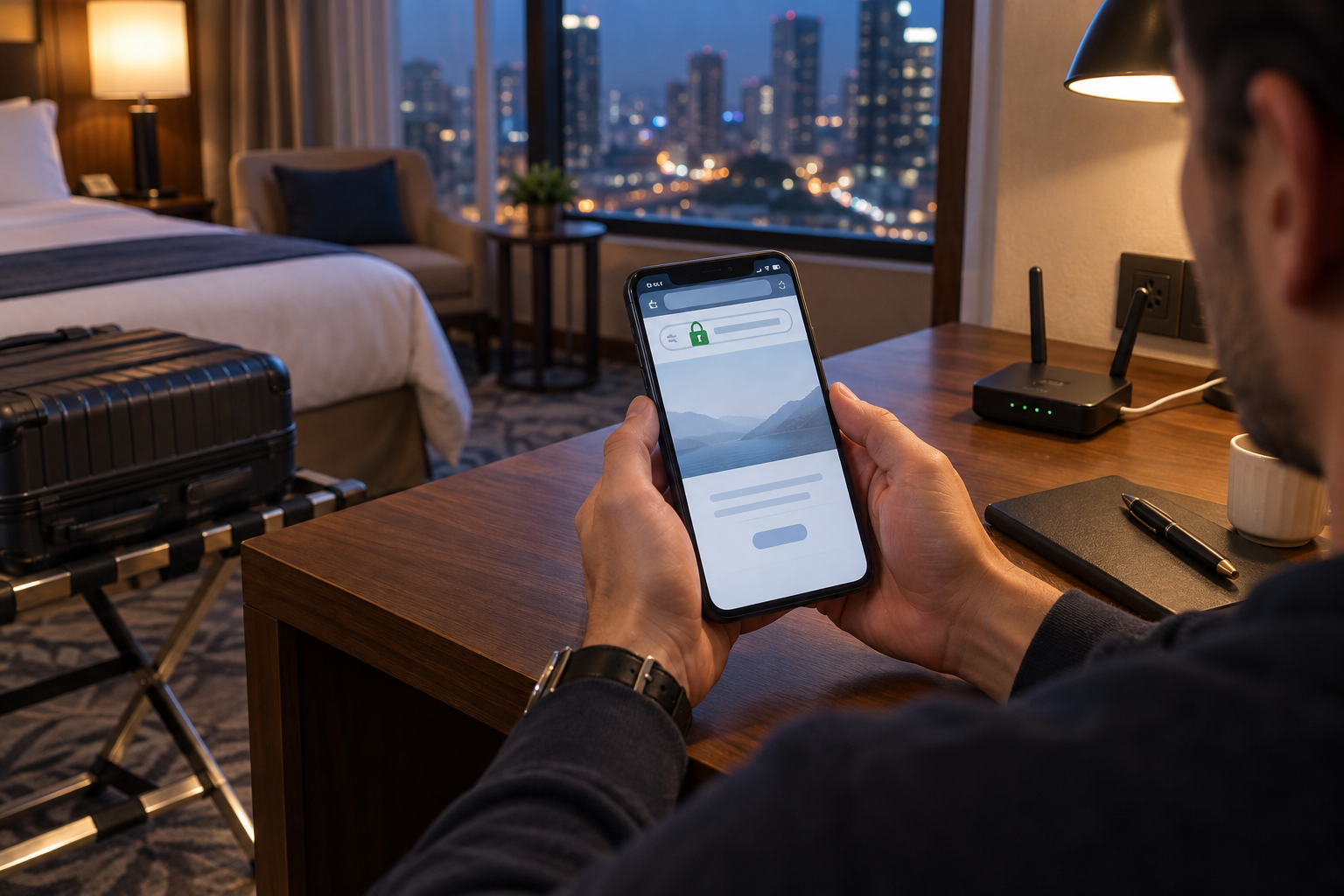
Hotels and airports are natural places to use digital services because they combine spare time, seating, power outlets, and Wi-Fi. They are also places where a traveler has little control over the network. A genuine hotel connection may be shared by hundreds of guests, while a network name that resembles the airport's official Wi-Fi can be created by somebody nearby. Captive portals add another layer of confusion, sometimes asking for a room number, email address, or acceptance of terms before allowing traffic through.
For low-risk activities such as reading public news, shared Wi-Fi may be adequate. Signing in to an account, changing a password, or entering payment information deserves more caution. The US Cybersecurity and Infrastructure Security Agency advises travelers to avoid conducting sensitive personal business on open public networks and to treat a phone like the full computer it is. Its guidance for internet-enabled devices while traveling is a useful starting point. When possible, use trusted mobile data or a verified private network, keep the operating system and browser updated, disable automatic Wi-Fi joining, and log out when a session is finished.
A virtual private network can protect traffic between a device and the VPN provider, especially on a network the traveler does not manage, but it is not a magic legal or identity tool. It does not turn an unlicensed service into a licensed one, change the law of the place where the user is physically located, or make a suspicious domain trustworthy. Travelers should not use location-masking technology to evade geographic controls. If a service reports that it is unavailable in the current region, the prudent response is to stop and check the rules rather than search for a workaround.
Why Mobile-First Design Matters on the Road
A travel-friendly website must perform well under less-than-perfect conditions. Mobile-first design is therefore about more than fitting buttons onto a narrow screen. It includes readable typography, controls that work with a thumb, clear navigation, restrained data use, and a layout that remains stable as a weak connection loads images. The best interfaces make essential account and security information easy to find without forcing the user through dense menus or pop-ups. They also communicate errors honestly: a payment delay, expired session, or regional restriction should not look like a generic failure that tempts the user to retry repeatedly.
Travel adds accessibility pressures too. Bright sunlight, noisy terminals, one-handed use, unfamiliar keyboards, and fatigue all increase the chance of a mistaken tap. A well-designed mobile platform uses adequate contrast, distinct confirmation steps, visible spending information, and an uncomplicated route to support. When evaluating Mersobahis or any comparable service abroad, travelers should pay attention to how clearly the mobile experience explains account status, transactions, privacy settings, time limits, and regional availability. Smooth graphics are pleasant, but transparent controls are more important.
Check the Domain Before Entering Credentials
Travelers often reach websites through hurried searches, forwarded messages, or links saved months earlier. Those routes can lead to imitation pages designed to collect usernames, passwords, or card details. Before signing in, read the entire domain from right to left, not just the familiar-looking word at the beginning. Look for swapped letters, extra hyphens, misleading subdomains, and unusual endings. A padlock and HTTPS indicate that the connection to that domain is encrypted; they do not prove that the operator behind the domain is legitimate.
Use a trusted bookmark or a carefully verified address rather than clicking a promotional link received in an unsolicited message. Passwords should be unique, ideally stored in a reputable password manager, and multifactor authentication should be enabled when offered. Never approve an unexpected login request simply because it appears while traveling. If a platform suddenly demands new identity documents or payment details, pause and verify the request through an independently located support channel. A few minutes of checking is less disruptive than dealing with a compromised account from another country.
Before signing in from a hotel or airport, confirm the network, inspect the full domain and avoid en
Online Availability Changes at Borders
Streaming libraries, games, payment tools, social platforms, and betting services can all change when a traveler crosses a border. The reasons vary. A provider may not operate in a particular market, a local distributor may hold content rights, a payment processor may block foreign transactions, or national regulation may require the service to restrict access. Temporary technical access is not evidence of official availability. Conversely, an error page does not necessarily mean the account is broken; it may be a deliberate regional control.
This distinction is especially important for online betting. Laws differ significantly among countries and sometimes among states, provinces, or territories within the same country. Rules can govern who may offer a service, which products are permitted, how customers are identified, what taxes apply, and the minimum age for participation. Some jurisdictions license online betting under detailed consumer-protection systems; others prohibit or tightly limit it. A traveler should check the regulator or government source for the place where they are currently located, rather than assuming that an account lawfully opened at home may be used everywhere.
Great Britain illustrates the location-based principle. The UK Gambling Commission's remote-sector guidance explains that an operator needs its licence to provide remote gambling to consumers in Great Britain, even if the business is based abroad. That example should not be treated as a universal rule or legal advice for another country; it demonstrates why travelers must consult the authority responsible for their present jurisdiction. A foreign licence, a familiar brand, or successful page access cannot replace that check.
A Practical Pre-Login Checklist Abroad
Confirm legality where you are. Check an official regulator or government website for the current country and, where relevant, the state or province.
Confirm eligibility. Meet the applicable legal-age requirement and any residence, identity, or location conditions.
Verify the service. Look for licensing information appropriate to the current jurisdiction and check it against an official public register when one exists.
Inspect the connection. Prefer trusted mobile data or a verified secured network; avoid sensitive transactions on open Wi-Fi.
Inspect the address. Read the complete domain, use a trusted bookmark, and do not rely on the padlock alone.
Set limits first. Decide on both a time limit and an affordable entertainment budget before opening the service.
Know how to stop. Locate logout, limit-setting, self-exclusion, and support options before they are needed.
This checklist applies whether a traveler is considering Mersobahis or another digital entertainment platform. It also protects against a common holiday mindset: the sense that normal routines and boundaries are temporarily suspended. Being away from home does not suspend account-security practices, financial obligations, or local law. In fact, unfamiliar networks and regulations make deliberate habits more valuable.
Payments, Currency and Account Verification
International use can make an ordinary transaction unexpectedly complicated. A card issuer may flag a foreign login, currency conversion may add cost, and a payment method available at home may not work in the destination. Travelers should understand the transaction currency, conversion rate, fees, withdrawal conditions, and processing time before committing funds. Repeatedly retrying a declined payment can create duplicate authorizations or trigger further security controls. It is better to contact the card issuer or platform through verified channels and determine the reason.
Identity checks are a normal part of many regulated services, but sending sensitive documents over public Wi-Fi is unwise. Use a secure connection, confirm the request is genuine, and understand why the data is needed and how it will be handled. Travelers should never provide credentials for online banking, share one-time security codes with support agents, or allow remote access to their device. Any request framed as urgent, secret, or necessary to release guaranteed winnings deserves immediate suspicion.
Responsible Entertainment Is Part of Good Travel Planning
A travel budget works because money is assigned a purpose before the trip begins: accommodation, food, transport, admission fees, and a reserve for surprises. Digital entertainment should fit inside the same structure. If a traveler chooses an activity involving money, the limit should be a small, predefined amount that can be lost without affecting the journey or obligations at home. Funds reserved for a room, ticket, meal, insurance, or emergency should never be placed at risk.
Time matters as much as money. A platform intended to fill a delayed departure should not consume an evening that was meant for sleep before an early train. Session reminders, device timers, deposit limits, and transaction histories can help maintain perspective. Avoid playing when exhausted, upset, intoxicated, or trying to recover a previous loss. Chasing losses changes the activity from planned entertainment into reactive financial behavior, and travel stress can make that shift harder to notice.
Legal age is not identical everywhere, so "adult" should never be interpreted as one universal number. The user must meet the age set by the current jurisdiction and the platform's valid terms. For context, the UK Gambling Commission's public guidance on gambling and young people states that the minimum age for online gambling in Great Britain is generally 18. Other destinations can set different limits or prohibit the activity, reinforcing the need for a local check.
Keep the Journey Larger Than the Screen
Digital entertainment is most valuable when it supports travel rather than replacing it. It can soften a delay, provide familiar company during a solo trip, or offer a quiet break after an intense day of sightseeing. The same device can then be put away for a walk, conversation, meal, or uninterrupted view. Downloading content in advance, turning off nonessential notifications, and setting a defined entertainment window make that balance easier.
It is also courteous to consider the shared environment. Use headphones, keep screen brightness reasonable on overnight transport, and avoid blocking scarce charging points after a device has enough power. Be cautious about displaying financial or account information where nearby passengers or cameras can see it. A privacy screen can be useful for frequent travelers, but situational awareness remains the better defense.
What Modern Travelers Should Take Away
The smartphone has made the waiting portions of travel more comfortable and more personal. It has also moved decisions about cybersecurity, jurisdiction, money, and attention into moments when people may be tired or distracted. The solution is not to abandon digital entertainment, but to approach it with the same preparation used for passports, insurance, and transport. Verify the connection and full domain, understand the mobile interface, protect credentials, and expect availability to change across borders.
For anyone considering Mersobahis while abroad, the essential framework is straightforward: check whether the service and activity are legal and available in the current jurisdiction, meet every applicable age requirement, use a secure connection, and decide strict time and spending limits in advance. Access alone is never proof of permission. Betting is not an income strategy, and no game outcome is guaranteed. Kept within those boundaries, digital services can remain what they should be on a journey-a limited form of entertainment alongside the much larger experience of discovering somewhere new.