For many first-time visitors to Seoul, Gangnam is already a familiar name.
Some know it through Korean pop culture, while others imagine office towers, luxury shopping, busy streets and a fast-moving business district. During the day, that image is fairly accurate. But after sunset, Gangnam begins to show another side.
Restaurants fill with office workers, groups move from dinner to drinks, and entertainment venues become busier as the night gets later. This is when visitors can experience one of Korea's most familiar social traditions: private karaoke.
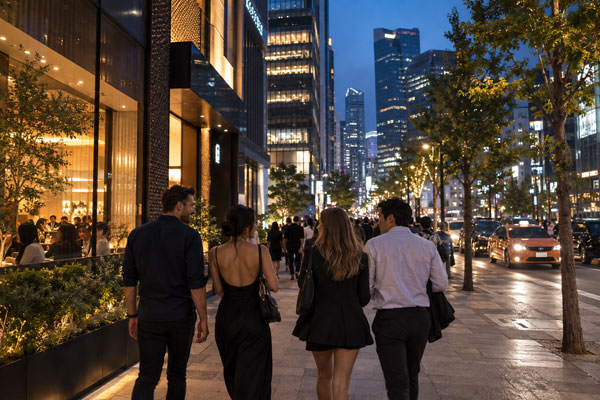 |
| After office hours, Gangnam's business avenues become a lively setting for dinner, conversation and |
|
Karaoke in Korea Is Different
In many Western countries, karaoke often means singing on a small stage in front of strangers.
Korea developed a different style.
Here, karaoke is usually called noraebang, meaning "singing room." Instead of performing in public, groups rent a private room equipped with microphones, screens and a song system.
The atmosphere is casual. Friends, coworkers and couples can sing without worrying about an audience.
This private-room format has been part of Korean social life for decades and remains popular even as nightlife trends continue to change.
Why Gangnam Has Its Own Karaoke Culture
Gangnam is especially suited to private karaoke because business, dining, hotels and nightlife all exist within the same area.
A typical evening might begin with dinner in Yeoksam or Gangnam, continue with drinks near Sinnonhyeon, and end at a karaoke venue before returning to a hotel.
Because so many people already spend their day in the district, they do not need to travel far to continue the evening.
This has helped create a large nightlife economy around restaurants, bars, cafes and private entertainment spaces.
From Simple Noraebang to Premium Karaoke
Not every karaoke venue in Korea is the same.
Some are small coin-operated rooms where customers pay for a few songs. Others, especially in Gangnam, focus more on larger rooms, sound systems, comfortable seating, interior design and privacy.
These premium venues are closer to private hospitality spaces than basic singing rooms.
For international visitors, understanding this difference is important. Searching for "karaoke in Seoul" can lead to very different experiences and price levels.
It is always better to check the venue before visiting.
A Private Karaoke Venue in Central Gangnam
One example of this premium format is 강남 달토, also known as Gangnam Dalto or Running Rabbit.
The venue is located beneath the Samjung Hotel on Bongeunsa-ro in central Gangnam, near Eonju Station and within easy reach of Sinnonhyeon and Yeoksam.
Its location is useful for travelers because the surrounding area already has hotels, restaurants, cafes and public transportation.
According to its official website, Gangnam Dalto operates 24 hours a day throughout the year. The site also provides information about private rooms, facilities, reservations, location and pricing.
For foreign visitors, having this information available before arrival can make the experience easier to understand.
Nightlife venues can feel less predictable than museums, restaurants or regular tourist attractions, so checking details in advance is always a good idea.
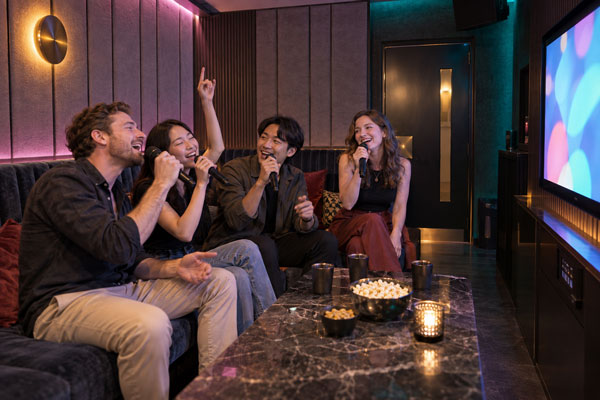 |
| A private noraebang lets friends share music in a relaxed room without performing before an unfamili |
|
Why Private Karaoke Appeals to Travelers
One of the biggest advantages of Korean-style karaoke is that you do not need to be a good singer.
Because the room is private, there is no unfamiliar audience.
A group of friends can sing Korean songs, English songs or anything else available without turning the experience into a public performance.
This makes karaoke an easy activity for travelers who want to experience something social after a day of sightseeing.
It also offers a different look at Korean culture.
Visitors often come to Seoul for palaces, markets, shopping districts and K-pop attractions. Noraebang shows another part of everyday Korean life that tourists may otherwise miss.
Korean Music Culture Beyond K-Pop
South Korea is now famous worldwide for K-pop, but singing-room culture existed long before the current global music boom.
For decades, Koreans have gathered in noraebang to sing ballads, rock songs, dance music and pop songs from many different generations.
A single room can move from a recent K-pop hit to a song released twenty years ago.
For travelers interested in Korean music, karaoke provides a more interactive experience than simply visiting a music shop or entertainment-company building.
You are not only watching Korean culture.
You are participating in it.
Planning a Night in Gangnam
Karaoke works best as one part of an evening rather than the entire plan.
Start with dinner somewhere around Gangnam, Yeoksam or Sinnonhyeon.
After dinner, walk through the area and enjoy the change in atmosphere as office hours end. Depending on the group, the next stop might be a cafe, bar or private karaoke room.
This flexible style of nightlife is common in Seoul.
Many evenings are not planned from beginning to end. One place simply leads to another.
That is part of what makes Gangnam interesting after dark.
Useful Tips for Visitors
Travelers should check current prices and operating details before visiting any private entertainment venue.
It is also useful to save your hotel address in Korean on your phone, especially if you plan to use a taxi late at night.
Do not assume every karaoke venue offers the same experience. A coin noraebang, neighborhood singing room and premium private venue can differ greatly in price, room size and service.
If a particular venue interests you, reviewing its website or contacting it in advance is the easiest option.
Seoul After Dark
Seoul is a city that often remains active long after dinner.
Restaurants stay busy, convenience stores remain open, cafes continue serving customers and taxis move through major districts late into the night.
Gangnam is one of the best places to experience this transition.
By day, it is a major business district.
By night, it becomes much more social.
Private karaoke is only one part of that nightlife, but it represents something distinctly Korean: a private space where friends or colleagues can continue the evening together without needing a large public venue.
For travelers looking beyond Seoul's traditional landmarks, spending a little time exploring Gangnam after dark can reveal another side of the city.
Sometimes the most memorable travel experiences are not famous attractions.
They are the ordinary things locals have been enjoying for years.